
[Macroeconomic Survival Ch. 2] Only After Retreating to Cash Did I Learn the Value of Waiting
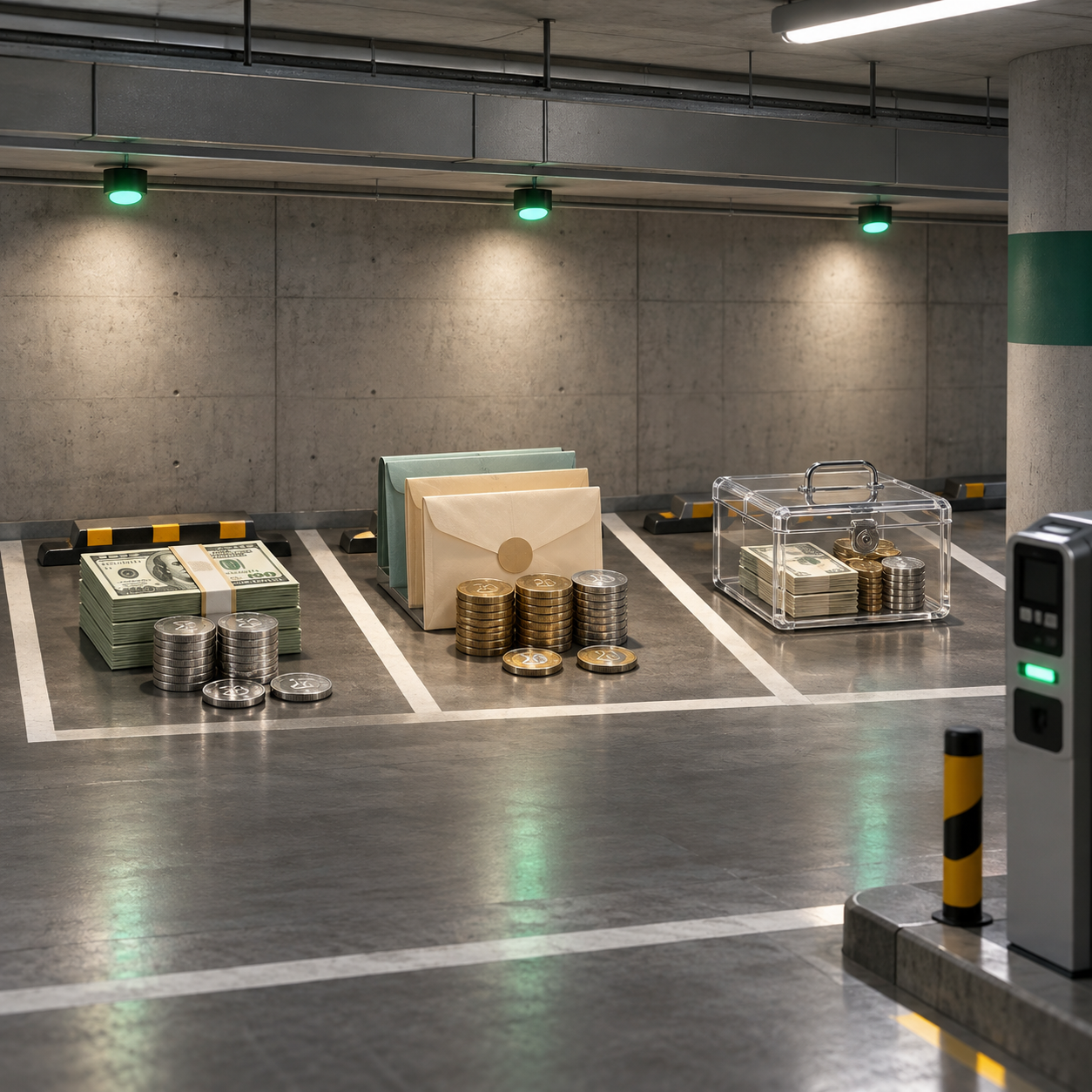
I Accepted the Loss and Took a Step Back
In 2022, I held bonds but did not feel safe.
BND, LQD, and a Korean 30-year government bond ETF looked like different products, yet all of them were vulnerable to rising rates. The long duration and additional borrowing embedded in the Korean fund made it especially difficult to wait for my forecast to become reality.
At first, I thought I only had to hold on. Korea's growth would eventually slow, inflation would settle, and rates would come down. Bond prices would then recover.
But a forecast that may eventually prove right and a position I can withstand today are different things.
I did not know how much further rates might rise or how much lower prices might fall along the way. More importantly, checking rates and currencies every day simply to endure the position was nothing like the safety I had intended to buy.
I reduced my long-duration exposure and stepped back.
There was nothing elegant about the decision. I first had to accept the loss and the fact that I could not dictate the market's sequence.
From there, I reconsidered an asset I had barely regarded as an investment.
Cash.
I Used to Think Holding Cash Meant Falling Behind
For a long time, cash looked idle to me.
It misses gains when stocks rise and loses purchasing power when prices rise. Investors often talk about holding cash as a lack of courage or an attempt to time the market. I also felt compelled to put every uninvested balance into something with a higher expected return.
Beginning in 2022, the situation changed.
The Federal Reserve began raising rates in March 2022. By July 2023, the target range for the federal funds rate had reached 5.25% to 5.50%. The same rate increases that pressed down long-duration bond prices were lifting the income available from short maturities and cash-like instruments.
Normally, investors demand more interest for lending money over longer periods because more can change in inflation and rates. Rapid central-bank tightening, however, produced an inverted yield curve in which short-term rates exceeded long-term rates. For a time, lending to the US government for only a few months offered more yield than assuming years of price risk in long bonds.
What I had wanted from long-duration bonds was a large capital gain when rates fell. Ultra-short bonds offered something more modest.
They did not promise a dramatic return. They reduced the need to predict prices far into the future.
The same rise in interest rates produced very different outcomes depending on maturity.
I Let My Dollars Wait in SGOV
The first place I chose for idle dollars was SGOV.
SGOV invests in US Treasury bills with remaining maturities of three months or less. Unlike a 20- or 30-year bond, its holdings mature quickly and are reinvested at then-current rates.
That difference matters when rates are rising rapidly.
A long bond locks in an older, lower coupon for years, so its price must fall to compete with newly issued higher-yielding bonds. An ultra-short bill matures soon. The fund can reinvest into a new bill at a higher rate, leaving its price far less sensitive to changes in rates.
The manager describes SGOV as a vehicle that may support capital preservation and liquidity management, and the fund pays distributions monthly. Ultra-short Treasury yields, barely visible at the beginning of 2022, rose with Federal Reserve tightening to roughly 5% by mid-2023.
The method of waiting mattered more to me than the precise number.
Long-duration bonds made my account move sharply with even small changes in yields. With SGOV, I could collect monthly income and defer the next decision instead of trying to call every move. My dollars had somewhere to stand until another US investment opportunity appeared.
SGOV is not identical to a dollar bank deposit. It is an ETF, so its market price and net asset value can move slightly. It also has costs and trading spreads. A Korean investor measuring returns in won still carries currency risk.
Even so, its risk was different from what I had assumed in the Korean 30-year fund. Most of the long-term rate forecast had been removed. What remained was primarily the income from very short US government obligations.
Korean CD-Rate ETFs Became a Place for Won to Wait
Dollars were not the only currency that needed a temporary home.
I also had won in brokerage and retirement accounts that had not yet been assigned to an investment. A bank deposit could lock the money until maturity, while cash left as an idle brokerage balance often earned little.
Korean CD-rate ETFs filled some of that space.
CDs are negotiable certificates of deposit issued by banks for short-term funding. Korean CD-rate ETFs typically seek to accumulate the daily return of an index linked to the 91-day CD rate. Their price path tends to resemble a gentle staircase rather than the larger movements of conventional bond funds.
They could be sold on an exchange when needed and could earn something close to a short-term rate while the money waited. That was useful when I had not yet found a stock to buy or did not feel ready to make a directional decision.
But an ETF with “CD” in its name is not the same as a bank time deposit.
Its trading price may differ from net asset value. Some products use over-the-counter derivatives such as swaps, creating counterparty risk. Fees, trading costs, and taxes can also make the investor's realized return different from the displayed rate.
What I gained was not a promise of principal protection.
It was a way to turn the waiting time of my won into interest without taking long-duration risk.
Cash Management Accounts and Money Market Funds Were Places for Liquidity
Some money would be needed too soon even for SGOV or an exchange-traded CD-rate fund. It might have to be transferred shortly or used immediately if an opportunity appeared.
I let that money wait in cash management accounts and money market funds.
A Korean cash management account typically sweeps balances into short-term instruments such as repurchase agreements or money market funds. MMFs also invest in short-maturity government debt, CDs, commercial paper, and similar instruments. Their purpose is not extraordinary return. It is to preserve liquidity while earning a short-term rate.
I used to call these balances “leftover cash,” as if they were incomplete because they had not yet been invested.
In a falling market, immediately available cash was not leftover money. It reduced the chance that I would have to sell a losing asset to cover living costs or a planned expense. It also let me buy without first disposing of something else. It preserved choice.
These accounts and funds are not identical to protected bank deposits either. Many are outside Korea's deposit-insurance system, and their precise risks depend on how they are managed. The structure, yield, and withdrawal terms must be checked product by product.
Instead of relying on the word safe, I began by separating the purpose of each balance.
- Money for near-term living expenses required the greatest liquidity.
- Won waiting for a Korean investment could follow a short domestic market rate.
- Dollars intended for US assets could wait in ultra-short US Treasuries.
They all looked like cash, but the right place depended on currency, timing, and destination.
Cash Bought Time More Than Return
Holding long-duration bonds had made me feel as though I needed an answer every day.
When would inflation turn? When would the central bank stop? How high could long-term yields go? Each day the market moved against my view became another recorded loss.
After moving into ultra-short assets, the questions changed.
I no longer had to identify the exact peak in rates. If rates rose further, the income on newly purchased short bills would eventually rise as well. If rates stayed high, I could continue earning that income while waiting.
Cash-like assets are not a solution for maximizing long-run returns. They may fail to keep pace with inflation, and they can miss rapid rebounds in risky assets. They are not a permanent home for every investment dollar.
At that moment, however, they were what I needed.
Cash was not an abandonment of investing. It gave me time to stop forcing a forecast and decide again later.
Passing through 2022 taught me that deferring a decision can matter as much as pursuing a return. When I did not know what to buy, I could postpone buying—and earn a modest rate while I waited.
Once I Could Wait, I Wanted to Predict Again
People adapt quickly to calm.
Inflation began to retreat from its peak, and the pace of Federal Reserve tightening slowed. The conversation in markets shifted toward the end of the hiking cycle and the eventual start of rate cuts.
The strength of ultra-short bonds then began to look like a weakness.
If rates fell, SGOV's income would fall with them. TLT and EDV, by contrast, could gain substantially from lower long-term yields. I worried that waiting safely would cause me to miss the strongest part of a bond rally.
Cash had bought me time.
I did not use all of that time to become more patient. I also used it to prepare another forecast.
In the next chapter, I return to long-duration bonds through TLT and the zero-coupon fund EDV. I also look back on why, once I had learned to wait, I again hurried to identify the peak in rates.
Sources Consulted
- Federal Reserve: July 2023 FOMC Decision
- US Treasury: Daily Treasury Par Yield Curve Rates
- iShares: SGOV Fund Structure and Distribution Schedule
- iShares: Cash Alternatives and SGOV
- Samsung Asset Management: KODEX CD-Rate Active ETF
- Korea Financial Investment Association: Cash Management Account Structures and Risks
🌊 [Macroeconomic Survival Series]
- Prologue: The Asset I Trusted Most Was the One I Understood Least
- Chapter 1: I Expected Slower Growth in Korea, but the Market Moved on a Different Clock
- Chapter 2: Only After Retreating to Cash Did I Learn the Value of WaitingCurrent
- Chapter 3: I Extended Duration While Waiting for the Peak in Rates
- Chapter 4: Preparing for Inflation Added More Risk
- Chapter 5: I Tried to Forecast Rates and Currencies Together
- Epilogue: Asking Again What My Investing Is For