
[Macroeconomic Survival Ch. 5] I Tried to Forecast Rates and Currencies Together
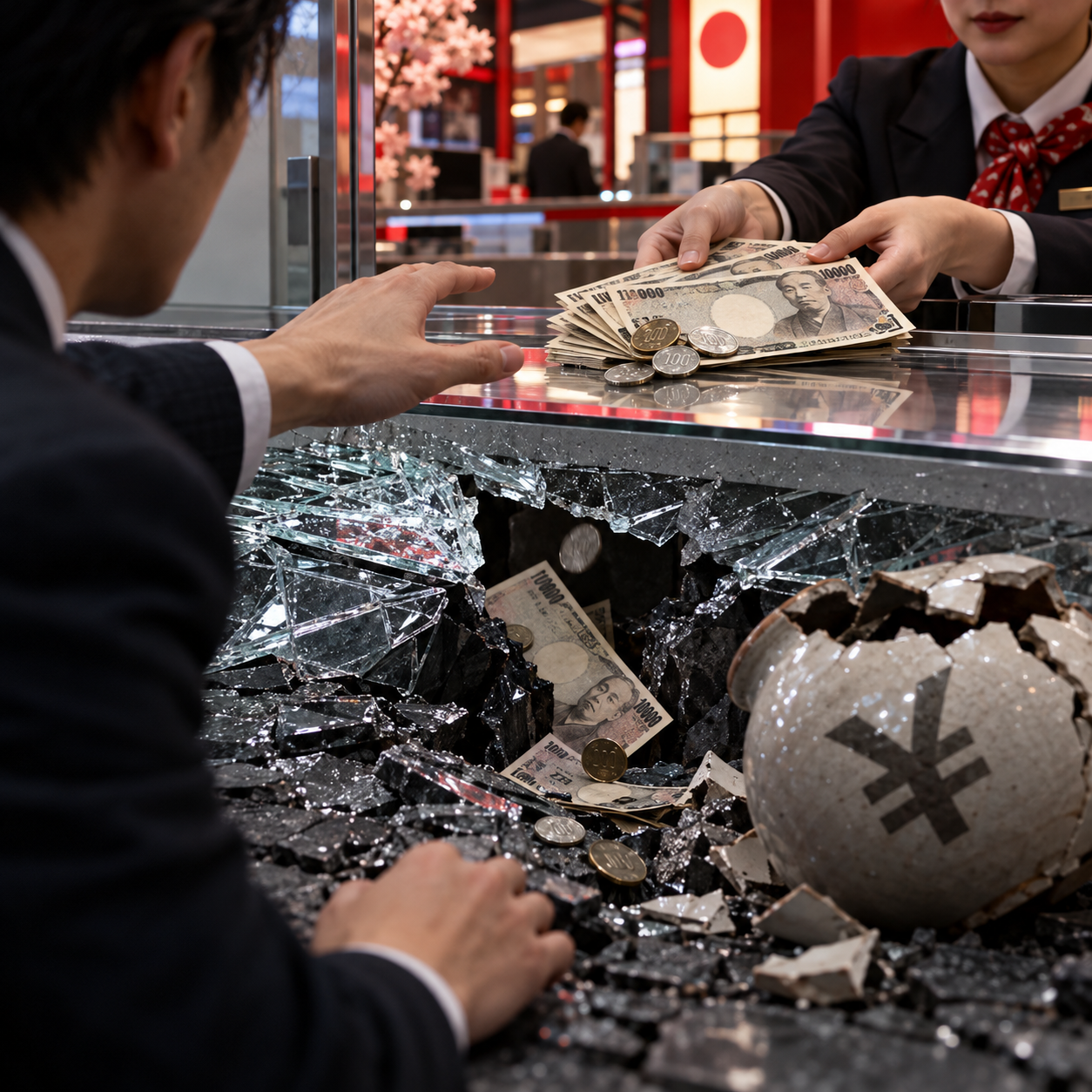
Two Central Banks Began Looking in Different Directions
In 2024, monetary policy in the United States and Japan appeared to be approaching different turning points.
The Federal Reserve had raised its policy-rate target rapidly from 2022, then held it at 5.25%–5.50%. The market's attention shifted from how much further the Fed might tighten to when it might begin cutting.
Japan was moving the other way. After years of negative rates and yield-curve control, the Bank of Japan stated in March 2024 that those frameworks had fulfilled their roles and began guiding the short-term rate to around 0%–0.1%. In July, it raised the target to approximately 0.25%.
One central bank stood near the end of tightening, while the other was beginning to step away from extraordinary easing.
The picture looked clear to me.
If US rates fell while Japanese rates rose, US long bonds and the yen might appreciate together.
In 2022, I had expressed one view—slower Korean growth—through a long government-bond fund. In 2023, I expressed an expected US easing cycle through EDV and TMF.
By 2024, I believed my approach had become more refined.
This time I tried to combine interest rates with a currency view.
A Dollar Gain Can Disappear When Measured in Won
For a Korean investor, the return on a US asset is not determined by the asset price alone.
If a US long bond gains 10% in dollars while the dollar falls nearly 10% against the won, most of the gain can disappear after conversion. The reverse is also possible: a stronger dollar can soften poor bond performance when the result is measured in won.
By holding EDV, I effectively held two exposures.
- US ultra-long Treasury exposure.
- US dollar exposure.
At first, I viewed the dollar as useful because it could cushion equity losses during periods of risk aversion. Then I began to worry that the dollar might weaken when the Fed cut rates, even if long-bond prices rose.
This too was a simplification.
A Fed rate cut does not guarantee a weaker dollar. Exchange rates reflect relative rates, growth, inflation, risk demand, and what markets have already priced. The dollar can strengthen during US easing if other countries cut faster or a crisis increases demand for dollar assets.
Even so, I wanted to reduce the possibility that dollar weakness would erase the bond return.
An alternative appeared more interesting than an ordinary won-hedged US Treasury ETF. It reduced dollar exposure while leaving exposure to the yen.
The Effect of Holding US Long Bonds in Yen
The product I chose was the RISE US 30-Year Treasury Yen Exposure (Synthetic H) ETF.
Its benchmark measures the performance of US Treasury bonds with more than twenty years remaining, calculated in yen terms. Through USD/JPY hedging, it reduces dollar exposure and is designed to resemble the result of holding US long bonds in yen.
The “Synthetic H” in the name does not mean every currency risk is hedged back to the Korean won.
The structure replaces the dollar exposure of the US bonds with yen exposure. A Korean investor therefore remains exposed to changes between the yen and the won. Removing one currency risk does not leave an empty space; it introduces another.
In simplified form, a Korean investor's outcome depends on:
- The price and interest income of US long-term Treasuries.
- The result and cost of converting dollar exposure into yen through USD/JPY hedging.
- Movements between the yen and the won.
- Fund expenses, synthetic implementation costs, and tracking difference.
The fund primarily uses over-the-counter derivatives rather than physically holding every underlying bond. That also introduces counterparty risk and the tracking risks associated with a synthetic ETF.
I had bought one ETF, but several prices were moving inside it.
The Yen Looked Cheap and the Rate Gap Looked Ready to Narrow
The yen had already endured a long period of weakness.
US rates were high while Japanese rates remained near zero. Demand for higher-yielding dollar assets and carry trades funded by borrowing yen were important parts of the explanation.
I did not think that difference could last indefinitely.
If the Fed cut while the Bank of Japan raised, the US–Japan rate gap would narrow. Dollar assets would become relatively less attractive, and a reversal of yen-funded carry trades might allow the yen to recover.
The reasoning again appeared coherent.
- Lower US long-term yields → higher prices for US 30-year bonds.
- A narrower US–Japan rate gap → less pressure on the yen.
- A stronger yen against the won → a currency gain for the Korean investor.
Compared with holding EDV alone, I thought the fund offered two sources of return. Because US bonds and the yen could move for different reasons, I also expected diversification.
Combining two forecasts in one product, however, does not automatically diversify risk.
If one view is wrong, it can erase the gain from the other. If both are wrong, the losses can overlap.
The Interest-Rate Gap Was Not a Separate Return
When I first studied the structure, I thought the US–Japan rate gap might create an additional source of return.
I imagined that hedging a high-yielding US asset into a low-yielding currency would produce a “hedge premium” equal to the rate differential, on top of a bond-price gain and a gain from yen appreciation.
That interpretation counted parts of the same relationship more than once.
Forward exchange rates used for currency hedging incorporate the difference between short-term rates in the two currencies. This relationship is described by covered interest parity. In a frictionless market, the gap between spot and forward exchange rates offsets the interest-rate differential so that hedging alone does not create a risk-free excess return.
When US rates exceed Japanese rates, much of the apparent advantage of the higher US yield is reflected in the forward price used to hedge dollars into yen. Currency hedging does not add a separate return from nowhere.
Actual hedge results also depend on cross-currency basis, rollover timing, transaction costs, and implementation. If the rate gap changes, the economics of the hedge change with it.
The core of the product was not “receive a free spread between 5% US rates and 0% Japanese rates.”
It was a US long-duration bond position whose dollar exposure had been converted into yen exposure.
Hedging does not remove risk. It is a choice about which risk to retain.
The Two Forecasts Could Produce Different Outcomes
I reconsidered what would have to happen for the combined strategy to work.
The most favorable setting would be a fall in US long-term yields, which raises bond prices, together with a stronger yen against the won. Both effects could then support the return.
Other combinations were equally possible.
| US long bond | Yen versus won | Possible result for a won-based investor |
|---|---|---|
| Rises | Yen strengthens | Both effects may increase the gain |
| Rises | Yen weakens | Currency loss may offset some or all of the bond gain |
| Falls | Yen strengthens | Currency gain may cushion part of the bond loss |
| Falls | Yen weakens | Bond and currency losses may occur together |
The US policy rate and US long-term yields could also move differently.
The Federal Reserve cut its policy rate by 0.50 percentage point in September 2024. That did not guarantee an equal decline at every Treasury maturity. Long-term yields could still rise in response to fiscal policy, Treasury supply, growth, and inflation expectations.
A Bank of Japan rate increase did not guarantee immediate yen strength either. If the move was smaller than expected or the rate gap with the United States remained wide, yen weakness could continue. Movements in the won added another layer for a Korean investor.
I thought I had placed two potential sources of return in one fund.
In practice, I had to judge the direction of two variables at the same time.
I Mistook Complexity for Diversification
At the beginning of this bond journey, my account held BND, LQD, and a Korean 30-year government bond ETF.
There were three products, but all were vulnerable to rising rates. I had diversified product names without diversifying the underlying risk.
A few years later, the portfolio had become much more complex.
I had moved through SGOV, EDV, LTPZ, and a yen-exposed US Treasury fund. I could explain duration, real yields, expected inflation, currency hedging, and interest parity.
Being able to explain more variables did not make the portfolio safer.
EDV was a concentrated view on US long-term yields. LTPZ carried long real duration and realized-inflation adjustments. The yen-exposed Treasury fund added yen/won movements and synthetic implementation to the long-rate exposure.
Owning several complex products made me feel more precisely diversified.
In reality, I had layered inflation and currency views on top of the same expectation that rates would eventually fall.
The number of products increased. So did the number of assumptions that could be wrong.
Understanding Macroeconomics Was Different From Forecasting It
The yen-exposed bond investment taught me useful things.
I learned that an exchange rate is not determined by one country's rates in isolation. I also learned that hedging is not a simple insurance policy that erases currency risk, but a transaction that changes the exposure through rates and forward prices.
That knowledge still matters.
What did not follow was the forecasting ability I thought the knowledge would bring.
I had to judge when and how far the Fed would cut, how long-term yields would respond, how quickly the Bank of Japan would normalize policy, and how the yen and won would reflect those differences. Each variable could be explained after the fact. Their combined path remained uncertain.
The purpose of studying macroeconomics should have been to understand my exposures, not to believe I could see the future.
It took me a long time to understand that distinction.
The Most Complex Product Brought Me Back to the First Question
I returned to bonds in 2022 for two reasons.
I wanted an asset that could reduce the damage when stocks fell, and I wanted cash flow that could become a paycheck after retirement.
For several years, I focused more on the tools than on those purposes.
I studied longer duration, inflation linkage, triple leverage, yen exposure, and currency hedging. Each could be useful in a particular setting. At some point, however, understanding the tools became more important to me than asking whether I needed them.
What I had originally wanted was not a return that required correctly forecasting US and Japanese rates, the dollar, and the yen.
I wanted a structure that would let my life continue when my forecast was wrong, reduce the need to sell stocks in a bad market, and produce regular cash after I retired.
After reaching the most complicated macro product in the sequence, I returned to the simplest question.
What job is this asset supposed to perform in my portfolio?
The next essay is not Chapter 6. It is the epilogue.
I will not end this series by claiming that the long-bond investment succeeded. I will look instead at the losses that remain, the choices that created them, and the way I have begun to redefine bonds as tools for time and cash flow rather than prediction.
It is a final record not of forecasting the macroeconomy, but of continuing to invest amid changes I cannot know in advance.
Sources Consulted
- Bank of Japan: Change in the Monetary Policy Framework, March 2024
- Bank of Japan: Explanation of the July 2024 Policy-Rate Change
- Federal Reserve: September 2024 Policy-Rate Cut
- RISE ETF: US 30-Year Treasury Yen Exposure Fund and Benchmark Structure
- RISE ETF: US 30-Year Treasury Yen Exposure Prospectus
- IMF: Covered Interest Parity and the Relationship Between Forward Rates and Interest Differentials
🌊 [Macroeconomic Survival Series]
- Prologue: The Asset I Trusted Most Was the One I Understood Least
- Chapter 1: I Expected Slower Growth in Korea, but the Market Moved on a Different Clock
- Chapter 2: Only After Retreating to Cash Did I Learn the Value of Waiting
- Chapter 3: I Extended Duration While Waiting for the Peak in Rates
- Chapter 4: Preparing for Inflation Added More Risk
- Chapter 5: I Tried to Forecast Rates and Currencies TogetherCurrent
- Epilogue: Asking Again What My Investing Is For